
影响我最深的一句话
每个人的人生中,总有那么一句话或一个建议,像一束光一样在关键时刻点醒了我们。也许是前辈的一句提点,也许是书里的一段话,又或许是某个朋友随口说的一句金句。
今天,不妨和大家聊聊:哪句话或哪个建议对你的影响最大? 当时发生了什么?它又是怎样改变了你的想法或生活的?
日本語
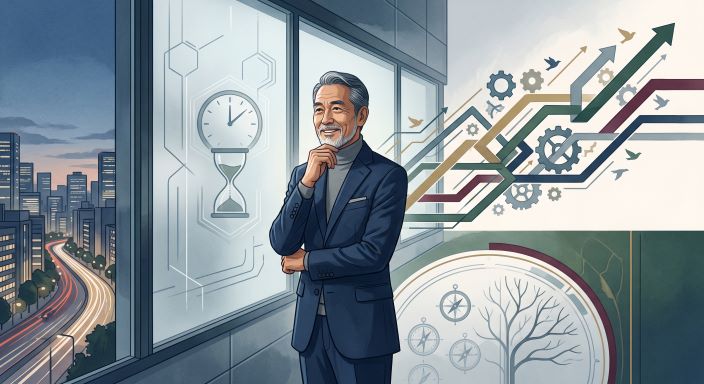
私に最も影響を与えた言葉、それは「人生はたった4000週間しかない」というフレーズです。80年生きても、私たちの人生は約4000週間しかありません。この言葉に出会ったとき、限られた時間の重みと、「将来後悔しないために、今何をすべきか」という強烈な問いを突きつけられました。
私はこれまで、技術者としてのキャリアを歩み、現在は大学院の社会人MBAで学びながら、シニアエンジニアの「幸せな再就職」やキャリア形成について研究しています。
年齢を重ねるにつれ、過去の選択を振り返ったり、将来への不安を感じたりすることが増えていました。「もし人生をやり直せるとしたら、もっと挑戦しておけばよかった」と後悔したくない。そう思ったとき、過去の反省や未来の不安に囚われている暇はない、「今この瞬間、目の前のことに全力を注ぎ、挑戦し続けるしかない」と気づかされたのです。
この「今に集中し、失敗を恐れずに新しい扉を開く」という思いは、私の研究や日々の活動の原動力になっています。
人生の後半戦を迎えたシニアエンジニアの仲間たちが、過去のキャリアにとらわれず、これからの限られた時間を心から輝かせ、幸せに働き続けられる場所を見つけること。それこそが、今私が情熱を注いでいる研究のテーマです。
「人生は限られている。だからこそ、今、何に挑戦するか」。この言葉を胸に、これからも一歩一歩、新しい道を開拓し続けたいと思います。ありがとうございました。
PR: AmazonのHSK対策本(2021年度版)
中国語検定HSK公式過去問集4級
中国語検定HSK公式過去問集5級
中国語検定HSK公式過去問集6級
中国語(ピンイン付き)
英語(フォニックス付き)
– The sentence that has influenced me most is, “Life is only about 4,000 weeks long."
(Duh sen-tuhns dat haz in-floo-unst mest most iz, “Lyf iz ohn-lee uh-bowt for-thow-zuhnd weeks lawng.")
– Even if we live to be eighty, our lives are only about four thousand weeks.
(Ee-vuh-n eef wee liv too bee ay-tee, owr lyvz ar ohn-lee uh-bowt for thow-zuhnd weeks.)
– When I encountered this phrase, I felt the heavy weight of a finite life, alongside a striking soul-searching question: “To avoid regrets in the future, what on earth should I be doing right now?"
(Wen eye en-kown-tuhrd dis frayz, I felt duh hev-ee wayt of uh fy-nyt lyf, uh-lawng-syd uh stry-king sohl-ser-ching kwes-chuhns: “Too uh-voyd re-grets in duh fyoo-cher, wuh-t on erth shood eye bee doo-ing ryht now?")
– I have long worked in technical fields, and I am currently enrolled in an executive MBA program while researching “happy re-employment" and career development for senior engineers.
(I hav lawng werkt in tek-ni-kuhl feeldz, and I am ker-uhnt-lee en-rohld in un eg-zek-yuh-tiv em-bee-ay proh-gram whyl re-ser-ching “hap-ee ree-im-ploy-muhnt" and kuh-reer di-vel-uhp-muhnt fawr seen-yer en-juh-neerz.)
– As I grow older, I often look back at past choices or feel anxious about the future.
(Az I groh ohl-der, I aw-fuhn look bak at past choy-sez or feel angk-shuhs uh-bowt duh fyoo-cher.)
– I do not want to regret in the future, thinking, “If I could do it all over again, I should have been much braver and taken on more challenges."
(I doo not wahnt too re-gret in duh fyoo-cher, thing-king, “If I kood doo it awl oh-ver uh-gen, I shood hav bee-n much bray-ver and tay-kuhn on mor chal-in-jez.")
– It is precisely this sense of urgency that made me realize I have no time to dwell on the past or worry about the future; all I can do is “focus on the present, give it my all, and keep taking on new challenges."
(It iz pri-sys-lee dis sens of er-juhn-see dat made me ree-uh-lyz I hav noh tym too dwel on duh past or wer-ee uh-bowt duh fyoo-cher; awl I kan doo iz “foh-kus on duh pre-zuhnt, giv it my awl, and keep tay-king on noo chal-in-jez.")
– This conviction—to “focus on the present, fear no failure, and constantly open new doors"—has become the driving force behind my current research and daily activities.
(Dis kuhn-vik-shun—too “foh-kus on duh pre-zuhnt, feer noh fayl-yer, and kawn-stuhnt-lee oh-puhn noo doorz"—haz bee-kuhn duh dry-ving fors bee-hynd my ker-uhnt re-ser-ching and day-lee ak-tiv-uh-teez.)
– How can senior engineers entering the second half of life break free from past career constraints, shine brightly in the time they have left, and find a stage where they can continue working happily? That is precisely the subject I am pouring my passion into right now.
(How kan seen-yer en-juh-neerz en-ter-ing duh sek-uhnd haf of lyf brayk free from past kuh-reer kuhn-straynts, shyn bryt-lee in duh tym day hav left, and fynd uh stayj whair day kan kuhn-tin-yoo wer-king hap-ee-lee? Dat iz pri-sys-lee duh sub-jekt I am por-ing my pash-uhn in-too ryht now.)
– “Life is finite; therefore, face challenges bravely in the present."
(“Lyf iz fy-nyt; ther-for, fays chal-in-jez brayv-lee in duh pre-zuhnt.”)
– Holding this phrase close to my heart, I will continue step by step to carve out my own brand-new path.
(Hohl-ding dis frayz klohs too my hart, I wil kuhn-tin-yoo step by step too karv owt my ohn brand-noo path.)
– Thank you very much.
(Thangk yoo ver-ee much.)