
如果可以在一年中加一个节日,你最想设定什么节日? もし一年の中に新しい祝日を一つ追加できるなら、どんな祝日を作りたい?
日本語
今日のスピーチのテーマは、
「もし新しい祝日を作れるなら、どんな日を作りたいか」です。
もし私が新しい祝日を作れるなら、
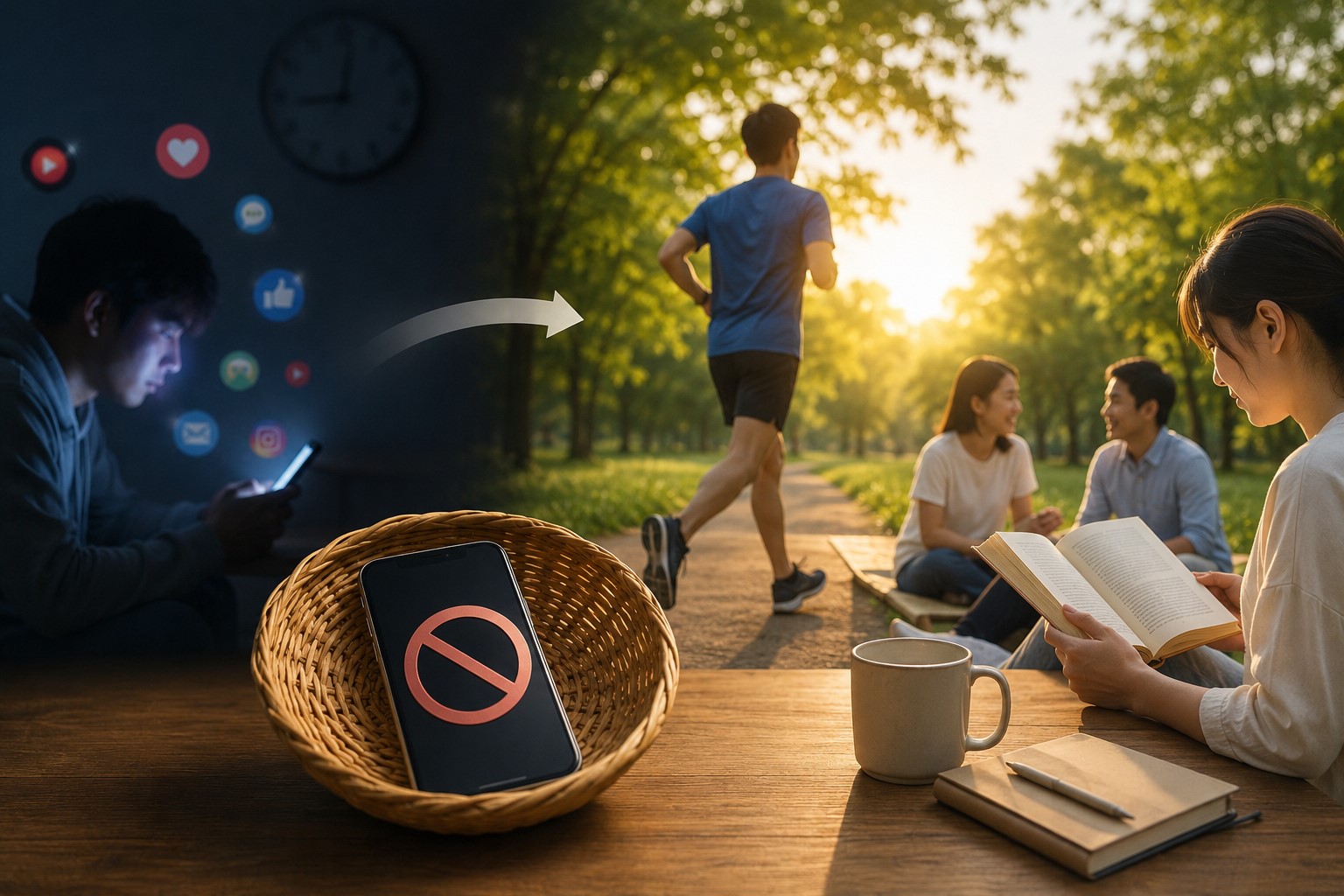
私は「デジタルデトックスの日」を作りたいです。
この日は、スマホをできるだけ使わない日です。
SNSを見ない。
短い動画を延々と見続けない。
ゲームやネットばかりに時間を使わない。
代わりに、
スポーツをしたり、
本を読んだり、
家族や友人と直接話したりする日です。
今の時代、多くの人は体は休んでいても、脳はずっと疲れていると思います。
私自身も、気がつくとスマホを見続けてしまうことがあります。
少しだけ見るつもりが、気づけば30分、1時間と時間が過ぎてしまいます。
便利な道具ですが、使いすぎると集中力や心の余裕を失ってしまうと感じています。
一方で、私はランニングをしている時、スマホから離れることで頭がすっきりし、心が落ち着く感覚があります。
また、本を読んだり、楽器を練習したりしている時も、時間を忘れて集中できます。
だからこそ、一年に一回くらいは、
「デジタルから離れて、自分自身の感覚を取り戻す日」
があっても良いのではないかと思います。
本当の休息とは、
ただスマホを見続けることではなく、
現実の生活に意識を戻すことなのかもしれません。
ありがとうございました。
PR: AmazonのHSK対策本(2021年度版)
中国語検定HSK公式過去問集4級
中国語検定HSK公式過去問集5級
中国語検定HSK公式過去問集6級
中国語(ピンイン付き)
英訳
Today’s speech theme is:
“If you could create a new holiday, what kind of day would you create?”
Phonics:
Tuh-dayz speech theem iz:
“If yoo kood kree-AYT a nyoo HOL-uh-day, what kind uv day wood yoo kree-AYT?”
If I could create a new holiday,
I would create a “Digital Detox Day.”
Phonics:
If I kood kree-AYT a nyoo HOL-uh-day,
I wood kree-AYT a “DIJ-i-tl dee-TOX Day.”
On this day, people would try not to use their smartphones as much as possible.
Phonics:
On this day, PEE-pl wood try not tu yooz thair SMART-fohnz az much az POS-uh-bl.
No social media.
No endlessly watching short videos.
No spending all day on games or the internet.
Phonics:
Noh SOH-shul MEE-dee-uh.
Noh END-lis-lee WAH-ching short VID-ee-ohz.
Noh SPEN-ding awl day on gaymz or thee IN-ter-net.
Instead, people would:
play sports,
read books,
or talk directly with family and friends.
Phonics:
In-STED, PEE-pl wood:
play sports,
reed books,
or tawk di-REKT-lee with FAM-uh-lee and frendz.
Nowadays, I think many people are physically resting, but mentally they are always tired.
Phonics:
NOW-uh-dayz, I think MEN-ee PEE-pl ar FIZ-i-klee RES-ting, but MEN-tl-ee thay ar AWL-wayz TY-erd.
Even I sometimes keep looking at my smartphone without noticing it.
Phonics:
EE-vn I SUM-tymz keep LOOK-ing at my SMART-fohn with-OUT NOH-tis-ing it.
I only plan to check it for a few minutes,
but before I realize it, 30 minutes or even an hour has passed.
Phonics:
I OHN-lee plan tu chek it for a fyoo MIN-its,
but bi-FOR I REE-uh-lyz it, THUR-tee MIN-its or EE-vn an OW-er haz past.
Smartphones are useful tools,
but if we use them too much, I think we lose our concentration and peace of mind.
Phonics:
SMART-fohnz ar YOO-sful toolz,
but if wee yooz them too much, I think wee looz our kon-sen-TRAY-shun and pees uv mynd.
On the other hand, when I am running,
being away from my smartphone helps clear my mind and calm my heart.
Phonics:
On thee UTH-er hand, wen I am RUN-ing,
BEE-ing uh-WAY from my SMART-fohn helps kleer my mynd and kahm my hart.
Also, when I read books or practice musical instruments,
I can focus so deeply that I forget time.
Phonics:
AWL-soh, wen I reed books or PRAK-tis MYOO-zi-kl IN-stru-ments,
I kan FOH-kus soh DEEP-lee that I fer-GET tym.
That is why I think that at least once a year,
it would be nice to have:
“A day to disconnect from digital life and reconnect with ourselves.”
Phonics:
That iz why I think that at leest wuns uh yeer,
it wood bee nys tu hav:
“A day tu dis-kuh-NEKT from DIJ-i-tl lyf and ree-kuh-NEKT with our-selvz.”
True rest may not mean continuing to look at our smartphones.
Maybe it means returning our attention to real life.
Phonics:
Troo rest may not meen kun-TIN-yoo-ing tu look at our SMART-fohnz.
MAY-bee it meenz ree-TURN-ing our uh-TEN-shun tu reel lyf.